Backstage
An excerpt from Why Sound Matters
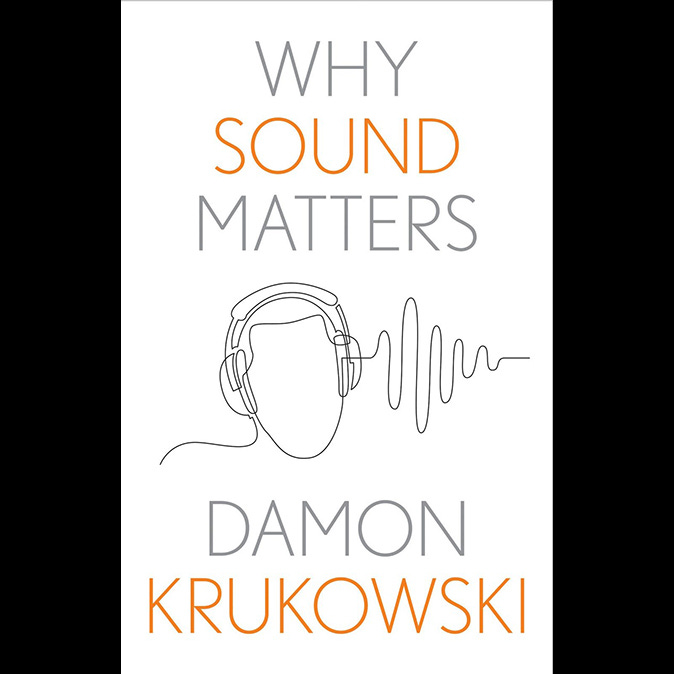
Why Sound Matters was just released in the UK and Europe on January 27 2026. The book makes an argument about sound as a material, the labor required to work with that material, and the value of that labor. But each of its more discursive chapters are introduced by shorter ones structured along the day of a musician on tour. This is Chapter 5, “Backstage”:
Backstage used to be a very social space. Bored or anxious, hungry or high, wired or exhausted, musicians waited around with little to do but talk. That talk could turn paranoid - in the eighties, I heard a lot about UFOs - or comic, or nasty. Drummer Charlie Watts famously said in 1986 that being in the Rolling Stones had been “work five years and twenty years hanging around.”
Today, backstages can be silent. People are on their smartphones or laptops and wearing headphones - not so different from an office, really. And like an office, it’s productive. There are social media accounts to tend, emails to answer, day jobs to hold down remotely. Who has time to waste talking about UFOs?
Digital tools have made us more productive by occupying all our time, and musicians are no exception. But time, to borrow the language of business, is a zero-sum game. Every productive minute is a minute lost to hanging out. A future Charlie Watts might end up with five years behind the drums and twenty years on a laptop. But had Charlie Watts spent twenty out of twenty-five years on a laptop, you might say that he’d been an office worker with a part-time job in music. Which is precisely what is happening to many professional musicians today.
What’s being eliminated is the “unproductive” time of being a musician. As anthropologists well know, actions that might look unproductive to an outside observer can have important if not crucial functions for a culture. Hanging around, for musicians, isn’t empty time - it’s time filled with exchange of information and social interactions. It’s time spent building and maintaining a community, in other words.
Building and maintaining a community takes work. It too is a form of labor. It may not be the type of labor our economy rewards, but that does not alter its function; it only fails to acknowledge and encourage its achievements.
If you’re not a musician and cannot imagine how hanging out backstage or in a van or studio could be part of professional activity, consider the distinction that media scholar Walter Ong draws between “oral” and “literate” cultures. Ong proposes that aspects of “primary orality” can persist in subcultures of literate societies:
Today primary oral culture in the strict sense hardly exists, since every culture knows of writing and has some experience of its effects. Still, to varying degrees many cultures and subcultures, even in a high-technology ambiance, preserve much of the mindset of primary orality.
Working in music before digital communications could well be described in terms of primary orality. Music - in particular, nonwritten music - shares much with Ong’s descriptions of language in an oral culture. Ong was a Jesuit priest as well as a literary scholar, and he describes the role of sound in language with almost mystical overtones.
Without writing, words as such have no visual presence, even when the objects they represent are visual. They are sounds. You might “call” them back - “recall” them. But there is nowhere to “look” for them. They have no focus and no trace… not even a trajectory. They are occurrences, events.
Meditating on the power of the spoken word leads Ong to thoughts about sound itself, and its “special relationship to time.”
Sound exists only when it is going out of existence. It is not simply perishable but essentially evanescent…. There is no way to stop sound and have sound. I can stop a moving picture camera and hold one frame fixed on the screen. If I stop the movement of sound, I have nothing - only silence, no sound at all.1
We can’t freeze sound. We can’t see it. And this, to Ong, is precisely how oral cultures treat words and why the technological shift to writing represents such a fundamental change in human and social psychology. In sacred terms - always the background to Ong’s thoughts - literacy transforms “the Word” into “the Book,” mapping the power of sound onto an object.
Digital technology has brought a similar change to nonwritten music in the past few decades, I believe. The invention of recording in the early twentieth century made sound plastic, something we could shape. But only in the digital era did sound became something we routinely see. Today, in the recording studio, we look at sound constantly on a screen. Now we can freeze it, not just stop it, as on vinyl or tape, but freeze it, like a single frame of film as Ong describes. In these infinitesimally small frames - their detail limited only by the resolution of our files and the processing power of our computers - we do not find silence but micro-moments of sound. They may be too quick for our ears but nonetheless they are clearly, resolutely there for us to see in time and space. Their evanescence, as Ong puts it, has been sacrificed for a new technology.
Ong assigns a set of practices to oral culture that mirror my experience of hanging out in pre-smartphone dressing rooms and tour vans, including “its participatory mystique, its fostering of a communal sense, its concentration on the present moment, and… its use of formulas.”2 Each of these shows up in clichés about musicians - if you’ve never been in a band with its participatory mystique and concentration on the present moment, watch This Is Spinal Tap. And if you want to watch the film like a musician, play it over and over till you’ve memorized its gags and turned them into formulas. (Spinal Tap was a flop in its theatrical release, but bands kept it on a loop in tour buses till it reemerged as a cult classic.) As my jazz-singer mother, Nancy Harrow, sometimes complains, “Musicians tell the same stories over and over.” But like the parables and maxims of traditional cultures, those repeated anecdotes traded in the van and backstage form a web of shared information - crucial for a community based on orality.
I suppose I was raised to hang out with musicians, after a fashion. I loved the company of my mother’s musician friends from as far back as I can remember. The first time I ever said my own name was caught by one of her rehearsal tapes made in our apartment - with Herbie Hancock as a witness, no less. He was a young pianist then, working as an accompanist for my mom, and there must have been no other childcare available so I became part of the rehearsal. “Damon,” a small voice says on the tape, between takes. “Did you hear that?!” says an excited Herbie Hancock. “He said his name! Say it again! Say it again!” “Damon,” the small voice obliges.
Many decades later, Herbie was at Harvard to deliver the prestigious Norton Lectures. Afterward, I walked to the lip of the stage in the grand hall with other well-wishers. He spotted me two or three deep in the crowd, did a double take, and suddenly said, “Damon? Did you know the first time you said your name…”
I was amazed he could recognize me; I hadn’t seen him face to face since I was a teenager (though I know I’ve come to resemble both my parents). And I was delighted to find my own family lore become a proper musician’s anecdote, ready for repetition.
When I was a little bit older than that voice on the rehearsal tape, the trombonist Bob Brookmeyer and songwriter Margo Guryan (who were married at the time) used to mind me for my parents - neither had kids of their own then, and they seemed to enjoy sitting in, as it were. Bob was impossibly tall, liked to play touch football, and made me laugh just as hard as he did the adults (although with different techniques: his conversation was so full of slang and quick asides it wasn’t till adolescence that I could start to pick up on his verbal jokes). A few years after that, when I no longer needed a babysitter, I would be doing homework while my parents played bridge with their pianist friends John and Mirjana Lewis, often with the latest Modern Jazz Quartet test pressing on the stereo. John would hum to himself as he listened and sorted his hand, just as I saw him do at the piano in performance. The four of them would talk late into the night over cards and cognac - I know they kept score, but the game never seemed too important.
Other evenings at my parents’ house with their musician friends were more raucous, especially when Bertram Ross the dancer and his partner the cabaret songwriter John Wallowitch came over. Bert was a master of Jewish humor, telling classic jokes in various outrageous accents and attitudes. And John would inevitably end up at the piano, singing ribald lyrics or viciously mimicking some performer he didn’t like. Later the two had a cabaret act together, and it was not so different from the performances I had grown up witnessing in our apartment, although I could no longer retreat to my bedroom when John started to get maudlin.
My mother asked a number of her friends to teach me different instruments - piano, guitar, drums. I was never much for reading music, so formal lessons would invariably slow and eventually stop. But once I began playing music in bands of my own, the hanging out part came easy. I didn’t know the ins and outs of gigging, recording, or trying to keep a group together - those were all lessons I learned the hard way, as they came. And I’m still not good at reading charts. But talking into the night, the silly jokes, the repeated stories, even the maudlin moments were all right there, same as I knew from childhood. This was a culture whose folkways I had long ago absorbed. The lessons were received, after all.
It seems more than coincidence to me that as musicians lose the orality of our subculture, we are also losing societal acknowledgment of and fair pay for our labor. Because measured in literate terms - in metrics that the office world recognizes, of emails and spreadsheets and Slack channels - what did Charlie Watts do all those years he wasn’t onstage? It takes a different idea of labor to appreciate everything he did that went into the perfect backbeat.
1. Walter J. Ong, Orality and Literacy (London: Methuen, 1982), 31.
2. Ibid., 134.


Having worked on a music video some years ago I realized in reading this that the entire video could been created in a studio rather than filming on a levee in Dallas in the evening. I ended up being responsible for making sure all trademarked items weren't being filmed during the 6 hours. But the camaraderie between all of us will never occur in a studio. And what stories do the musicians have to remind each other of in the future if they have spent it buried in a phone or laptop during a tour?
Wow, the part about time being a zero-sum game really stood out to me, making me think of your earlier peice on technology's impact on our 'free' time, though I'm still weighing up if the quiet productivity of today's backstage is truly a loss compared to the old days, for all its social banter.