

There has been a slew of AI music headlines of late, although to a working musician it can feel like Kremlin-watching: we might look to business articles and corporate press releases for hints, clues, suggestions of what is going on, but we can’t really know what is being decided by whom, and we may never know even as the results take shape in our material lives.
Last year, the RIAA and the three major labels sued AI music companies Suno and Udio for copyright infringement by mining their catalogues without permission. But evidently they didn’t sue to stop them, because they have been settling for a piece of the action instead.
In the wake of those settlements, the AFM announced a lawsuit against Universal and Warner. But again, the point of the suit doesn’t seem to be that AFM wants to stop major labels from settling with AI music companies, it’s that they want to see some of this money added to the contracts they manage. “We look forward to resuming our negotiations as scheduled,” said the Warner rep about the lawsuit, unperturbed even about their calendar of upcoming meetings. “The AFM chose this route during our collective bargaining negotiations, and we will continue to work to resolve any issues through these negotiations, as we have in the past,” said the Universal rep. Business as usual, apparently.
Now Spotify and Universal have announced AI tools enabling anyone to remix existing tracks and have them stream publicly on the platform alongside the original recordings they are based on. But what these tools look like, what tracks they can be applied to, and how any royalties earned by them will be assigned are left entirely unspecified - as is any launch date. Nevertheless, Spotify stock jumped 13% on the announcement. Mission accomplished?
Where this leaves independent artists is where we always seem to be in the digital era: with no seat at the table, and no guarantees of compensation from either the illegal or legal use of our work by these corporations.
Lest you think we’re disinterested observers, The Atlantic has provided a tool for all artists to search some of the datasets used by these corporations to build their generative AI models.
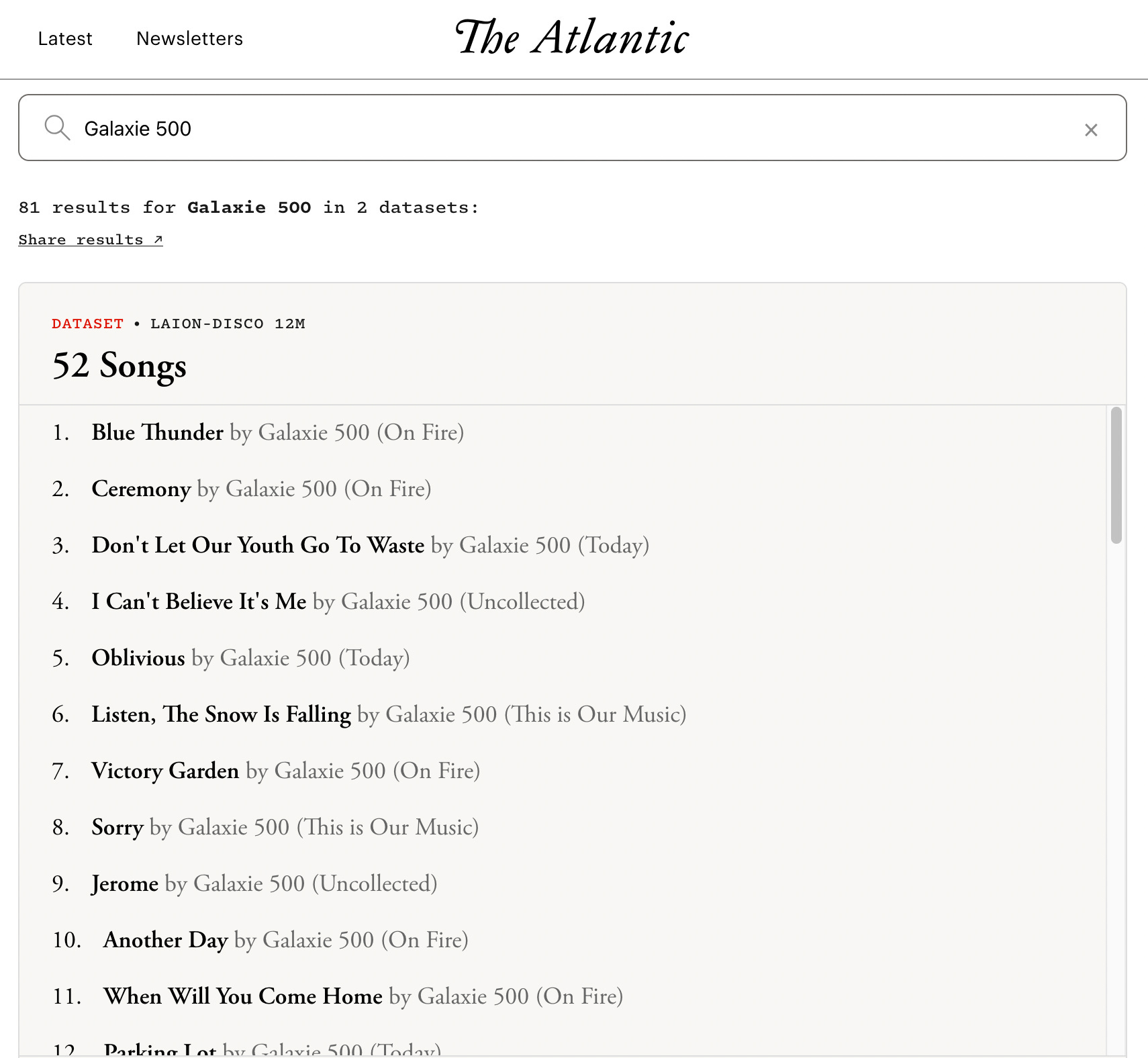
There are 52 tracks by Galaxie 500 in just one of these datasets. I think we recorded 53 songs in the studio, so maybe they missed one. In any case, there are other datasets out there being used for developing AI models, apparently including everything on YouTube, so whatever the total number of recordings any of us have participated in, I have no doubt they are all in the mill.
It’s too late, in other words, to wonder whether your or my music is being mined for AI. It is. It has been. Even what you haven’t yet created likely will be too.
However, it’s not too late to challenge the power structure that is making use of this technology and divvying up its profits through faux lawsuits and settlements and backroom deals. There is nothing inevitable about a technology being used for the profit of a few despite it being based on labor of the many.
We need to be more than bystanders as this story develops. We have to build power as creators and assert our rights directly with these corporations, platforms, and even with those nonprofits who claim to represent our interests in closed door negotiations. Organize, damn it! Join me at United Musicians and Allied Workers, and/or join a local group, and/or get involved in political action.
Because if this technology is as disruptive as it claims, nothing will be what it was for independent artists any more than for anyone else. These corporations are already carving up our collective work. There’s no time to lose, and nothing to be gained by watching from over the walls.
Listening to: Adormidera, by Josephine Foster
Cooking: gooseberry jam
Thanks for sharing this. The AI watchdog tool is interesting- some of my music has also been grist to the mill, apparently. I shall share with my peers and encourage them to get involved in the fight back.